


SDG 4
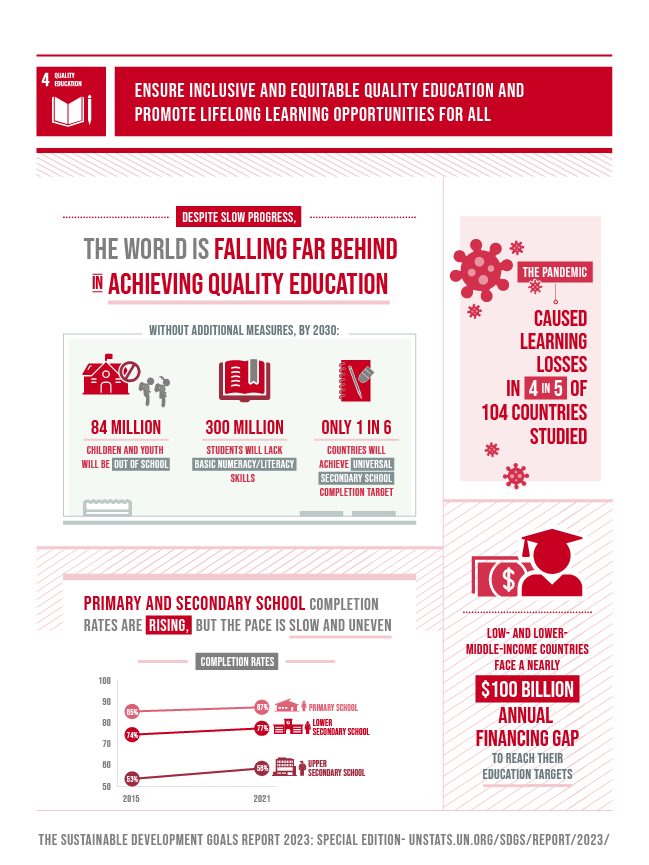
Ensure inclusive and equitable quality education and promote lifelong learning opportunities for all
Media education plays a crucial role in achieving Sustainable Development Goal 4 (SDG 4), which aims to ensure inclusive and equitable quality education and promote lifelong learning opportunities for all. Here’s how media education contributes to SDG 4
Promoting Critical Thinking and Media Literacy
Media education equips learners with the skills to critically analyse and evaluate media messages, including news, advertisements, and digital content. By teaching students to distinguish between fact and fiction, identify bias, and assess the credibility of sources, media education empowers them to make informed decisions and navigate the increasingly complex media landscape.
Fostering Digital Skills and Digital Citizenship:
In today’s digital age, media education helps students develop essential digital skills, such as digital literacy, information literacy, and digital communication. By teaching responsible online behaviour and promoting digital citizenship, media education prepares learners to engage positively and ethically in digital communities, contribute to online discourse, and combat digital misinformation and cyberbullying.
Enhancing Communication and Media Production Skills
Media education provides opportunities for students to develop communication and media production skills, including writing, storytelling, graphic design, photography, videography, and audio production. By creating their own media content, students learn to express themselves creatively, share their perspectives, and contribute to public discourse on important issues, thus fostering freedom of expression and media pluralism.
Addressing Inequalities in Access to Information
Media education can help bridge the digital divide by promoting equitable access to information and media resources. By providing training on how to access, create, and share digital content, media education enables learners from diverse backgrounds to participate more fully in the digital society and benefit from the opportunities offered by new media technologies.
Empowering Active Citizenship and Social Change
Media education empowers students to become active citizens and agents of social change by raising awareness about social issues, advocating for human rights, and promoting social justice. By examining media representations of marginalised groups and underrepresented voices, media education encourages empathy, tolerance, and respect for diversity, thus contributing to the promotion of inclusive societies and peaceful coexistence.
Supporting Lifelong Learning and Professional Development
Media education is not limited to formal schooling but encompasses lifelong learning opportunities for people of all ages and backgrounds. By offering continuing education programs, workshops, and online courses on media literacy and digital skills, media education supports lifelong learning and professional development, enabling individuals to adapt to technological advancements and thrive in the digital economy.
In summary, media education is a vital component of SDG 4, contributing to the development of informed, empowered, and responsible global citizens who are equipped to navigate the challenges and opportunities of the digital age and contribute to building a more inclusive, equitable, and sustainable world.
 The Open Film School Foundation